



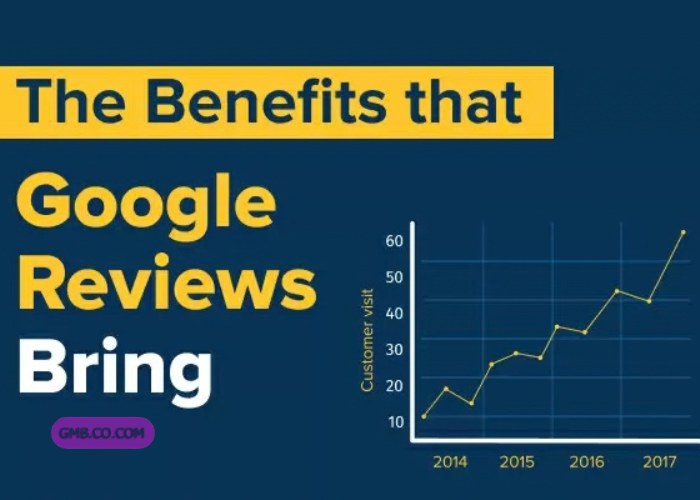
Search engines have transformed how customers find local businesses. Every day, people search Google for nearby services, and Google Reviews play an important role in shaping their trust and purchasing decisions. The Benefits of Google Reviews go beyond customer feedback—they can support local SEO, improve credibility, increase customer engagement, and drive business growth.
Google Business Profiles have become a key part of local discovery. Customers can compare ratings, read recent reviews, check business information, and contact businesses directly from search results. As zero-click searches continue to grow, maintaining a strong and active Google review profile has become increasingly important for local businesses.
In this guide, we’ll explore the Benefits of Google Reviews and how businesses can use authentic customer feedback to improve visibility, build trust, attract more customers, and support long-term growth.
The Core Benefits of Google Reviews for Local Businesses
Building Unshakable Social Proof and Immediate Customer Trust
Social proof forms the foundation of consumer behavior. When shoppers evaluate an unfamiliar business, they rely heavily on peer opinions. First of all, the primary advantages of google reviews center on instant credibility. Research shows that 81% of consumers utilize Google reviews to evaluate local businesses, while 88% read feedback before making a final selection. Prospective buyers seek reassurance that a company delivers on its promises.
Plus, positive ratings eliminate initial buyer hesitation. Approximately 74% of consumers express greater trust in a local business when it displays positive Google ratings. On top of that, 88% of buyers trust online reviews just as much as personal recommendations from friends or family members. The impact of authentic peer feedback is immediate and profound.
Consider the perspective of a local customer evaluating service options:
“To find a reliable plumber used to take days of asking neighbors, but reading detailed Google reviews made my choice obvious within five minutes.” – LocalShopper_2025 Trust built instantly.
Doubt eliminated completely. When customers see detailed, authentic feedback from real people in their community, their perception of risk drops significantly. However, trust requires ongoing proof. Businesses that maintain high star ratings naturally project professionalism, reliability, and superior service quality.
Driving Customer Purchasing Decisions and Conversion Rates
Online ratings directly dictate buyer behavior. Buyers do not simply skim star averages; they analyze customer experiences carefully. In fact, 54.7% of consumers inspect at least four individual reviews before deciding to purchase a product or book a service. High star ratings convert passive searchers into active customers.
Additionally, the display of reviews creates a dramatic lift in conversion performance. Profiles that display five or more reviews can increase customer conversion rates by up to 270% compared to profiles without reviews. Similarly, a one-star increase in an overall rating leads to a 5% to 9% boost in overall business revenue.
On top of that, when a business improves a rating by one full star, the result is a massive 44% conversion rate increase. Consumers demonstrate a clear willingness to pay premium prices for highly rated services. Studies reveal that shoppers are willing to spend up to 31% more with businesses that maintain excellent review profiles, and this underscores the clear benefits of good google reviews.
The Direct Financial Impact Across Common Industries
The financial benefits of getting google reviews scale directly with transaction values. Single positive entries generate distinct lifetime financial values depending on the specific commercial sector.
| Industry Sector | Average Customer Lifetime Value | Estimated Financial Value of One 5-Star Review |
| Coffee Shop / Local Bakery | $8 – $20 | $5 – $50 |
| Restaurant / Dining Establishment | $25 – $100 | $25 – $250 |
| Barber Shop / Beauty Salon | $40 – $120 | $50 – $300 |
| Auto Detailing / Vehicle Care | $150 – $400 | $100 – $600 |
| HVAC / Roofing / Plumbing Services | $1,000 – $5,000+ | $1,000 – $5,000+ |
High customer ratings serve as a direct shortcut to consumer trust. When two competing service providers offer similar pricing, the company with superior ratings wins the customer every single time.
Unlocking the Advantages of Google Reviews for Business Foot Traffic
Physical foot traffic relies heavily on local search visibility. Mobile device users frequently search for immediate solutions while on the go. Phrases such as “near me” or “open now” signal urgent buying intent. Google Business Profiles catch these high-intent buyers right at the decisive moment.
Gradually, businesses that build high rating counts see an influx of walk-in customers and direct phone inquiries. High ratings enhance the clickability of search listings. Clickability represents the engagement factor of a local listing.
A business with dozens of enthusiastic 5-star ratings draws eyeballs away from neighboring competitors. Plus, Google Maps integrations guide motorists and pedestrians directly to store entrances. Therefore, digital reputation translates directly into physical foot traffic and real-world cash flow.
How Google Reviews Power Local SEO Rankings
The Local SEO Engine and Google’s Ranking Signals
Search engine optimization for local companies operates on specialized algorithmic rules. Google openly confirms that customer reviews directly influence local search rankings. In fact, review signals account for 10% to 15% of the total local search ranking factors. Search engine algorithms utilize three primary criteria to determine local positioning: Relevance, Distance, and Prominence.
Relevance measures how closely a business profile matches the specific terms typed into a search bar. Distance calculates the physical proximity of the searcher to the business location. Prominence evaluates how well-known, authoritative, and well-regarded a business is within its local community. Customer reviews sit directly inside the prominence calculation. A business with a substantial volume of positive, recent reviews appears significantly more prominent to search algorithms than a competitor with sparse feedback.
Dominating the Google Local 3-Pack
The Local 3-Pack is the ultimate prize in local search marketing. This featured map block displays the top three local service providers at the very top of Google search results pages. To secure a position within the Local 3-Pack changes everything for a local company.
On top of that, presence in the Local 3-Pack generates approximately 126% more website traffic and 93% more customer actions than ranking in organic positions four through ten. Review quantity, velocity, and average scores dictate which businesses earn these top three spots. Industry benchmarks highlight a clear distinction between average listings and top-ranking market leaders.
Review Volume Benchmarks for Search Rankings
Data from local search analyses reveals the relationship between review counts and search positioning.
- Businesses in the top rank of the Google Local 3-Pack average roughly 404 total reviews.
- Top local businesses across general categories average approximately 47 reviews.
- The typical average local business profile holds only about 39 reviews.
- High-volume, competitive sectors like hotels average over 309 reviews per profile.
How Review Keywords Enhance Profile Relevance
Customer reviews do not merely contribute numeric scores; they provide valuable textual content. When clients write detailed descriptions of their experiences, they naturally include specific service keywords and neighborhood location names. For example, when a consumer writes a detailed post, search engine algorithms parse the text:
“The technicians completed our emergency furnace replacement in downtown Springfield quickly and professionally.” – SpringfieldResident
These organic keyword inclusions strengthen profile relevance for specific search queries. Google reads user-generated text as authentic confirmation of the services a business provides. Thus, the regular collection of detailed reviews containing specific service phrases directly enhances search visibility for competitive local terms.
The Importance of Review Recency, Velocity, and Volume
Why Review Freshness Outweighs Historical Accumulation
Many business owners make a critical mistake in their local marketing strategy. At that time, they run a single review drive, collect fifty ratings, and then stop completely. However, search engines and consumers prioritize review recency over old feedback. Review recency evaluates how recently a company received new feedback.
First of all, consumer trust depends heavily on fresh reviews. Research indicates that 73% of consumers only trust reviews written within the past 30 days. Additionally, 83% of buyers state that review recency is essential for establishing trust. A profile holding two hundred feedback entries from three years ago tells search engines very little about current service standards. On the contrary, a profile accumulating fifteen new reviews every month signals active, reliable operations.
Algorithmic Decay of Old Reviews
Search engine algorithms apply a steep weight decay to aging review content.
- Reviews under 30 days old carry 100% of their algorithmic ranking weight.
- Reviews older than 90 days lose a significant portion of their ranking influence.
- Reviews older than 180 days retain only 10% to 20% of their original ranking power.
Local pack suppression frequently begins within 60 to 90 days of complete review inactivity. When fresh feedback stops arriving, search engines interpret the silence as a potential sign of declining business activity.
Review Velocity versus Total Review Count
Knowledge of the distinction between review velocity and cumulative review count is vital for long-term SEO success. Total review count represents the aggregate number of reviews on a profile. Review velocity measures the consistent rate at which new reviews arrive over time.
Review velocity functions as a far stronger ranking lever than total volume alone. A business receiving five new reviews consistently every month will regularly outrank a competitor holding five hundred static, ancient reviews. Consistent arrival rates demonstrate ongoing customer satisfaction.
Industry Cadence Targets for Steady Review Flow
Local businesses must establish predictable monthly acquisition targets.
- Standard small and medium-sized businesses should target 4 to 8 new reviews monthly.
- High-volume sectors like restaurants, salons, and medical clinics should aim for 10 to 15 new reviews monthly.
- Competitive urban service providers should maintain a rolling 90-day window with at least 15 new entries.
Finding the Star Rating “Trust Sweet Spot”
Perfection can raise unexpected doubts among online shoppers. A flawless 5.0 rating across dozens of entries can appear unnatural or manipulated to discerning buyers.
The most credible average rating range sits between 4.2 and 4.5 stars. Consumers perceive profiles within this range as genuinely authentic. Occasional critical remarks balanced by professional owner replies actually enhance profile credibility.
However, a drop below a 4.0 threshold introduces severe business friction. In fact, 87% of consumers refuse to consider businesses rated below 4.0 stars. On top of that, the accumulation of more than four unaddressed negative reviews can deter roughly 70% of prospective clients.
The Power and Benefits of Responding to Google Reviews
Why Responding to Reviews is Non-Negotiable
Public responses from business owners represent a powerful, highly cost-effective reputation management tool. Many business managers focus exclusively on generating new ratings while ignoring existing feedback. However, the benefits of responding to google reviews impact both customer conversion and search ranking performance.
First of all, nearly all potential customers read owner responses. Statistics show that 97% of individuals reading online reviews pay close attention to business responses. Additionally, 53% of customers expect a public response to negative feedback within seven days, while one in three expects an even faster reply.
Plus, actively responding to all feedback boosts conversion performance. Business profiles that consistently reply to 100% of customer reviews experience a 16.4% increase in conversion rates compared to unmanaged profiles. Furthermore, 65% of consumers express a higher likelihood of choosing a business that actively replies to reviewer feedback, and this clearly proves the benefits of replying to google reviews.
Turning Negative Feedback into Customer Loyalty
Negative feedback feels challenging to address, yet public responses offer an opportunity to demonstrate accountability, professionalism, and empathy. The advantages of responding to critical feedback become especially obvious when handling unsatisfied clients. Prospective clients watch how a business handles mistakes.
Remarkably, 44.6% of consumers will still do business with a company after reading a negative review if the business owner replied with a professional, solution-oriented response. An effective response demonstrates genuine ownership. Consider this example of an exemplary public reply:
“Thank you for your candid feedback, Sarah. You are absolutely right—our service delay on Tuesday was unacceptable. We have adjusted our staff scheduling to prevent this issue going forward. Please contact me directly at the store so I can make this right for you personally.” – StoreManager_2025
This professional reply accomplishes multiple objectives simultaneously. It acknowledges the customer’s frustration, accepts responsibility, explains a concrete structural fix, and offers a direct communication path. Future readers observe a business owner who cares deeply about quality control.
Maximizing Responses for Positive Customer Feedback
Replies to positive feedback are equally important for long-term customer retention. Sincere expressions of gratitude reinforce positive relationships and encourage repeat business.
When responding to positive ratings, managers should avoid canned, copy-pasted responses. Instead, mention specific details brought up by the customer. Highlight specific team members when clients praise individual employees. For instance, if a reviewer praises a technician by name, the manager can respond directly:
“Thank you for the wonderful feedback, Mark! We are thrilled that Jason provided exceptional service during your installation. We will be sure to pass your kind words along to him!” – OperationsTeam
This personal touch humanizes the brand, boosts employee morale, and shows community engagement.
Google Local Guides and the Benefits of Review Points
Understanding the Google Local Guides Program
Google encourages community contributions through its global Local Guides initiative. Local Guides are active community members who write reviews, upload photographs, answer local questions, update business addresses, and verify location details on Google Maps.
Google gamifies this contribution process by awarding experience points for every approved submission. The point structure rewards detailed, helpful contributions over brief ratings.
Points Structure in the Google Local Guides Program
- A standard review awards 10 points.
- A detailed review exceeding 200 characters awards a 10-point bonus (20 points total).
- Each uploaded photo awards 7 points.
- Each video clip awards 12 points.
- Short Q&A responses award 3 points each.
As contributors accumulate points, they advance through Levels 1 through 10 within the program. Higher levels unlock digital profile badges that display publicly next to the contributor’s username.
The True Benefits of Google Review Points
Many consumers and business owners ask about the specific benefits of google review points. It is important to separate myth from reality regarding Google’s reward ecosystem.
First of all, the benefits of leaving google reviews and the benefits of giving reviews on google through the Local Guides program center on community impact and non-cash perks.
Local Guides gain immense satisfaction from helping local shoppers make informed choices. Additionally, high-level Local Guides earn early access to new Google feature releases, promotional discounts, partner offers, and occasional invitations to exclusive Google workshops or events.
Important Policy Clarifications on Monetization
- Google NEVER pays cash to users for posting reviews or accumulating Local Guides points.
- To offer money, discounts, or free gifts to customers in exchange for positive reviews violates Google terms of service and federal law.
- Federal Trade Commission (FTC) guidelines impose severe penalties reaching up to $51,744 per violation for paid or deceptive review practices.
Therefore, businesses must focus exclusively on earning organic, authentic feedback through excellent service delivery.
Best Practices for Getting More Authentic Google Reviews
Creating Frictionless Request Workflows
Systematic review generation requires eliminating friction for the customer. To ask clients to open a browser, search for a business name, locate the map listing, and click the review button results in high drop-off rates. Every extra step reduces completion rates by up to 40%.
First of all, businesses must acquire their direct Google Business Profile short link. This short link directs customers straight to the star rating and comment box on mobile and desktop devices.
Channels for Review Request Automation
- SMS Text Messaging: Text messages yield open rates exceeding 98%. An SMS request with a direct short link sent 2 to 4 hours post-service produces maximum response rates.
- Automated Email Follow-ups: Short, personalized email reminders sent 24 hours after a transaction capture customers while the experience remains fresh.
- Physical Touchpoints: QR codes and NFC tap cards placed at checkout counters, on service vehicles, or printed on customer invoices allow instant mobile scanning.
Staff Engagement and Compliant Asking Protocols
Frontline employees play a pivotal role in review acquisition. Staff training to ask satisfied clients at key operational milestones yields consistent results.
When a customer expresses vocal satisfaction with a service, staff members should immediately make a polite ask:
“We are so glad we could fix your issue today! If you have 60 seconds, a quick tap on our review link helps our small team immensely.” – FrontlineServiceScript
Additionally, business owners can legally incentivize staff members to ask for feedback. For example, team bonuses for every authentic review that mentions an employee by name create strong internal motivation without violating review gating policies.
Avoiding Penalty Traps and Fake Review Risks
Attempts to manipulate online ratings carry severe risks. Search engine algorithms utilize advanced machine learning to detect artificial spikes, unnatural reviewer behavior, or suspicious IP clusters.
In fact, Google removed over 55 million policy-violating reviews in a single year to protect platform integrity. Violations of review guidelines lead to review purging, public warning banners pasted on profiles, or permanent Google Business Profile suspensions. Authenticity and ongoing compliance remain the only viable long-term strategy.
Google Reviews in the Era of Zero-Click Searches and AI Mode
Navigating Zero-Click Search Realities
Digital discovery has entered a zero-click era. Approximately 58.5% of searches in the US and 59.7% in the EU conclude without a user clicking through to an external website. Google search result pages now function as complete answer engines.
Features like Local Packs, Knowledge Panels, and AI Overviews answer consumer queries directly on the search page. For local service businesses, the Google Business Profile has effectively replaced the corporate website as the primary digital shopfront. Consumers compare star ratings, read recent reviews, check business hours, and place direct phone calls without ever visiting the main company site.
Review Data as Canonical Fuel for AI Search Engines
Artificial intelligence models rely heavily on customer review data to make real-world business recommendations. Modern AI search tools evaluate recent reviews as verifiable proof of operational quality.
In fact, AI recommendation algorithms weight reviews written within the past 90 days two to three times more heavily than reviews older than one year. AI search tools seek recent confirmation that a business continues to provide exceptional service. Therefore, the maintenance of a continuous flow of fresh, detailed reviews ensures visibility across traditional search results and emerging AI search recommendation platforms alike.
Industry-Specific Insights and ROI Comparisons
High-Ticket versus High-Volume Business Impact
Review acquisition strategies must adapt to specific industry purchase cycles. High-volume businesses like restaurants and coffee shops generate hundreds of reviews easily due to frequent transactions.
Conversely, high-ticket industries like legal services, home remodeling, medical practices, and roofing process fewer transactions but face intense scrutiny per purchase. In high-ticket industries, a single 5-star review can be worth thousands of dollars in new contract value.
Comparing Google Reviews to Alternative Platforms
While platform diversification remains wise, Google maintains a dominant lead over alternative review directories.
| Review Platform | Market Usage / Share | Primary Business Strength | Target Audience Intent |
| Google Business Profile | ~57-58% Share (~73% Market Share) | Dominates local search, Maps, and instant discovery | Immediate purchase intent; urgent local needs |
| Yelp | ~45% Usage Share | Detailed written feedback; strong urban presence | In-depth comparison; dining and home services |
| Facebook Business | ~25% Usage Share | Social engagement; recommendations from friends | Community discovery; visual retail and events |
| TripAdvisor | ~25% Usage Share | Travel and hospitality focus | Tourism, hotels, and destination dining |
Heavy investment in Google Business Profiles delivers the highest return on investment for local visibility, customer trust, and organic conversion growth.
FAQ’s
What are the benefits of Google Reviews for a business?
Google reviews provide essential advantages for local companies by boosting online visibility, the establishment of immediate consumer trust, and driving higher sales conversions. Positive reviews act as powerful social proof that influences prospective buyers. Additionally, higher review counts and positive ratings improve local search engine rankings, and this helps businesses outshine competitors in their local market.
How do Google Reviews help improve local SEO?
Google reviews enhance local search engine optimization by supplying search algorithms with key prominence and relevance signals. Reviews represent roughly 10% to 15% of total local ranking factors. Search engine systems evaluate review quantity, recency, velocity, and keyword choices within customer comments to rank business profiles higher in Google Maps and the Local 3-Pack.
Can Google Reviews increase customer trust and credibility?
Yes, Google reviews increase customer credibility significantly. Research indicates that 74% of consumers express greater trust in a local business when it features positive Google feedback. Furthermore, 88% of prospective buyers trust online customer reviews just as much as personal recommendations from friends and family members.
How do Google Reviews influence customer purchasing decisions?
Google reviews influence buyer choices by reducing perceived risk during the evaluation process. Over 54% of shoppers read at least four individual reviews before deciding to purchase. High star ratings and positive customer stories build buyer confidence, and this results in a 270% lift in conversion rates when profiles display five or more positive reviews.
Do Google Reviews help businesses attract more customers?
Yes, Google reviews help businesses attract significantly more customers by increasing search visibility and listing clickability. A top position in the Google Local 3-Pack with strong ratings yields 126% more traffic and 93% more customer actions compared to lower-ranking positions. High ratings convert casual online searchers into walk-in visitors and phone inquiries.
How do positive Google Reviews improve a business’s online reputation?
Positive Google reviews improve an online reputation by creating a strong, public library of authentic customer endorsements. An average rating between 4.2 and 4.5 stars signals consistent service quality and operational excellence. Professional responses to positive and negative feedback further enhance public perception, and this proves that the business values customer satisfaction.
Concluding Words
In summary, customer ratings on Google serve as the ultimate growth engine for modern local enterprises. The acquisition of a steady stream of authentic feedback enhances local search engine rankings, unlocks prime visibility in the Google Local 3-Pack, and converts passive searchers into loyal clients.
Furthermore, active owner responses to reviewer feedback build lasting community trust and protect brand credibility. Through automated request systems, frontline staff training, and review recency management, local business owners can maximize the benefits of Google Reviews to dominate their local market and secure long-term financial growth.